
The Brokenness of the Anabaptist Communion
There is a shift in theology from one of the largest and most influential Mennonite denominations in the world, the Mennonite Church USA, that has had a profound impact on other Anabaptist-Mennonite groups, particularly in the global South.
Many churches in the global south hold conservative or fundamentalist positions on sexuality, and this has led to growing tensions in their relationship with the broader global communion. The Mennonite World Conference (MWC), a global communion of Anabaptist-Mennonite-related churches, has lost national churches in recent years because of its association with MC USA. The Mennonite Church in Ethiopia (MKC) even withdrew its invitation to host the MWC Assembly and broke its relationship with Anabaptist Mennonite Biblical Seminary (AMBS), a Seminary directly connected to MC USA, for the same reasons. Before examining the issue of division among Anabaptist groups more closely, I would like to revisit the origins of these groups.
To build a solid foundation for my case study, I believe we need to look back before we can look forward—and only then can we ask whether there is truly a future for all Anabaptist-related churches to be part of a single, unified denomination with an identity they can claim as their own.
I. Origins and Historical Development
Unlike other major denominations that emerged during the Reformation, the Anabaptists did not gain significant recognition in the religious world until a considerable amount of time had passed. While most Protestant groups were fighting for influence across Europe, Mennonites and other Radical Anabaptists were simply trying to survive, fleeing from persecution wherever they went. There has never been one central, influential Anabaptist institution that consolidated, directed, or organized the spread of Anabaptist faith. In fact, many early groups did not even realize they were part of a broader “Anabaptist movement,” and many refused to be labeled “Mennonites.” From the very beginning, the movement was decentralized—and for 400 years, it essentially remained that way.
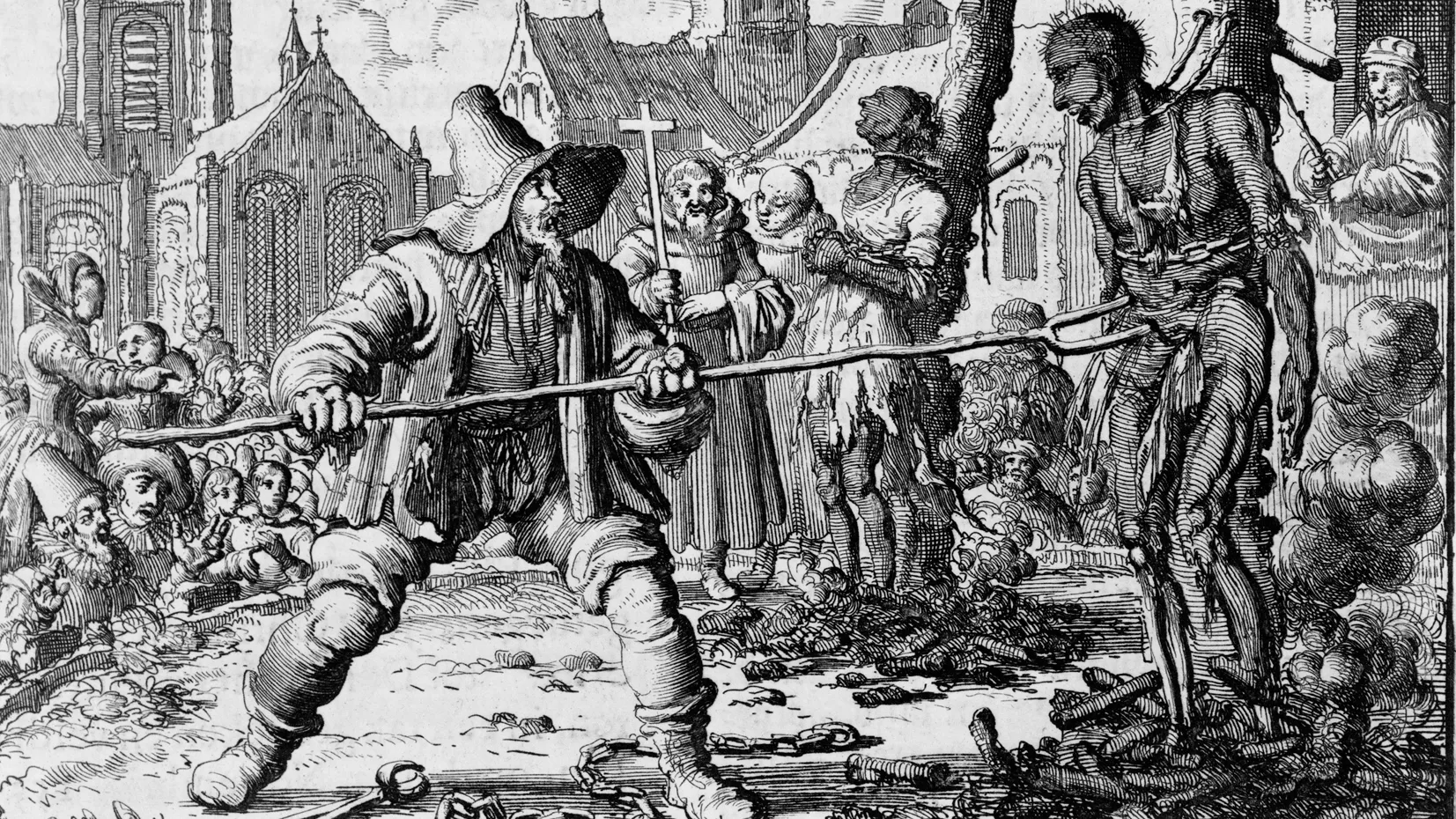
With the age of exploration and colonial expansion came the worldwide spread of Christianity. Some Anabaptist–Mennonite groups migrated in search of lands where they would no longer face persecution; others, usually more organized, traveled to far-off colonies as missionaries, carrying with them a distinctly Anabaptist expression of Christian faith. In places like the Philippines, Anabaptist presence arrived in waves. Initial contact was established through Mennonite Central Committee (MCC) relief work in the 1970s. But MCC did not “found” a church; rather, they met existing Christians who were open to joining Mennonite missionaries and learning Anabaptist teachings.
In my view, early Filipino church leaders likely saw this as an opportunity to break away from their previous denominations and connect with a global organization. This was not necessarily about embracing Anabaptism as a unique theological tradition—most Filipinos simply see all evangelical churches as “born-again” Christians. Joining Mennonite missionaries was a way to access international connections and resources. I believe this dynamic is similar in other parts of the world where Christianity already existed before Mennonite missions arrived. Mennonites often focused less on converting non-Christians and more on integrating existing Christians into their churches.
II. Ideological Shifts and Structural Drift
Keep evangelism at the heart of our conversations. In North America, Anabaptist groups grew primarily through natural growth rather than outreach efforts. In some places in North America, being a Mennonite is even viewed by some as an ethnic identity or “race”. For many, being Mennonite or Amish is more about heritage than a matter of religious conviction. Many Mennonites in North America and Europe today come from long-established Mennonite families—lineages that trace their roots back to the Reformation. For them, their story is about tradition, not conversion.
When Mennonites first gathered 100 years ago under what would become the Mennonite World Conference, they did not envision a global denomination. They simply wanted fellowship—a worldwide gathering of related churches. That is why the name “conference” made sense: it was an event, not a governing body. And yet, a century later, MWC is evolving into something more interconnected—an organization that now envisions itself as a truly global church.
For a while, everything looked promising. There were significant efforts to unify conferences in North America, particularly as Anabaptist-Mennonites began rediscovering their identity, reorganizing, and coming together as a unified global family. Across Europe, many churches joined together and formed larger national conferences. It seemed like a new era of unity was emerging. But despite this hopeful momentum, Anabaptist-Mennonites have struggled to remain together. Even MCC eventually experienced its own division, separating into MCC USA and MCC Canada.
Today, it feels as if the Anabaptist-Mennonite World Community is shaken—standing at the edge of being broken apart. For 100 years, we have tried to live, worship, and walk together as one global family. And yet, we now find ourselves dividing, withdrawing, and drifting apart in our fellowship. Is this the way of Shalom? How can we teach Shalom to the world when we struggle to find it within our own community?
III. Application & Theological Analysis
How does your understanding of the gospel affect the way you view this situation?
If the gospel of Christ is the “good news” that there is always hope for reconciliation, then I feel relieved knowing that there is also hope for reconciliation among Mennonite churches in this brokenness. There is hope for forgiveness, understanding, and unity. Christ remains the unifying factor in every faction. Mennonites may disagree on many things, but one thing we all hold in common is the central role of Christ in our church life and faith.
In what specific ways does this situation need shalom? Where does the brokenness lie?
The brokenness lies in church relationships and cooperation. There is considerable distrust and even hostility among groups. There is a noticeable unwillingness to listen to one another, and each faction has built a negative image of the other—forgetting that we are equal co-heirs in Christ. Shalom is needed especially in relationships and trust, which form the foundation of a healthy and faithful community.
What role might the church play in this situation?
The Church is central in this situation because we cannot truly call ourselves a reconciling church if we leave conflicts unresolved among our own brothers and sisters. The brokenness I am pointing out exists within the church itself. It’s essential to acknowledge this, as while MC USA may stand on its own principles as an independent church, the same holds true for other Mennonite bodies, such as MKC. They can all function independently. But independence is not the vision of Christ for His Church. We need to discover how we can continue working together and remain in the same communion, because the Church is all of us together, not the conferences to which we belong.
Congregations should be involved in these conversations, not just conference leaders, because they, too, are part of the Church. A holistic approach is needed—one that goes beyond surface-level conversations. Everyone, from leadership to regular members, must understand what it means to be part of this global communion.

What dimensions of mission are reflected here? How might transformation witness God's reign?
This speaks directly to the mission of MWC: to serve as a space for conversation and eventual reconciliation among different Anabaptist groups in conflict. MWC must be seen as unbiased and trustworthy enough to mediate these tensions.
If we can find a way to meet halfway despite our differences, and if everyone chooses to remain in communion, then we can truly embody our teaching of Shalom. In doing so, we will embody humility, forgiveness, and reconciliation—not only for ourselves, but also as a witness to the world and to our ecumenical partners. We can become a living example of Christ’s witness, showing how Christ unites His Church even in the midst of deep conflict and differences.
IV. Conclusion
After 500 years, I find myself asking, “Are the Anabaptist-Mennonite churches mature enough to become a single denomination?” Were we ever meant to be together in the first place? Are these conflicts something we are truly willing to resolve, or are we quietly heading in different directions—splitting again, only this time into theological differences so wide that in another 500 years we may no longer even recognize one another?
We must also be honest with ourselves: do we truly want to be a Church that impacts the world, or are we merely trying to survive until our members pass away and our congregations slowly fade away? The demographic reality in North America—especially in MC USA and MC Canada—is aging, and many churches face the very real possibility of fading away. Yet instead of asking how we can be a church that shares its faith, invites people in, and contributes something meaningful to the world, we pour so much of our energy into social issues alone. Don’t get me wrong—I believe social justice matters. However, without a living faith, without conversion, and without the core of the gospel, all of those discussions lose their meaning; social justice affirmation must be accompanied by evangelism.
“The impact of the whole and reconciled gospel on the world depends on the wholeness of the bold and humble church.”
Everything goes back to the vision of a whole and reconciled church. If we want to be relevant in the world today, we need to be both bold and humble—humble enough to reconcile with our brothers and sisters, and bold enough to face the world with hope. The teaching of Shalom is central to Anabaptist-Mennonite faith, and I truly believe it has so much more to offer the world. But we are often not bold enough to share it. We shy away from evangelism because of the harm it has caused in the past; yet, I also recognize that evangelism is the very thing that brought the Christian faith to me and to my community. When done rightly, evangelism brings healing, restoration, and life.
I believe churches from the global south—shaped by community-centered cultures—have gifts that North American churches desperately need. The global communion is a gift to us all. Years ago, Europeans and North Americans brought the gospel to the Global South; now, I believe the hope for the church today may come from the Global South, bringing back the spirit of evangelism to North America and Europe. This is why unity in the global communion matters so much—because we truly need each other.
People need Christ—especially here in the United States, where many are searching for meaning, a Savior, and hope. A huge number of young people walk away from the church not because they hate Christianity, but because they were never actually evangelized. Even those who grew up in church were often never introduced to a Savior, never taught about the Healer who longs to meet them. Loneliness and depression have become common because people lack the community, belonging, and purpose that the church is meant to offer.
References
Mennonite Church USA. (n.d.). MC USA Delegate Assembly widens the circle for LGBTQ people and those with disabilities. Retrieved December 11, 2025, from https://www.mennoniteusa.org/news/mc-usa-delegate-assembly-widens-the-circle-for-lgbtq-people-and-those-with-disabilities/
Mennonite World Conference. (n.d.). History of MWC. Retrieved December 11, 2025, from https://mwc-cmm.org/en/resources/history-mwc/
Mennonite World Conference. (2019, July 12). A gentle peace witness: The Mennonite Church in the Philippines. https://mwc-cmm.org/en/stories/gentle-peace-witness-mennonite-church-philippines/
Schrag, P. (2025, November 26). Ethiopians cancel hosting 2028 world assembly, MWC leader says. Anabaptist World. https://anabaptistworld.org/ethiopians-cancel-hosting-2028-world-assembly-mwc-leader-says/
Tizon, A. (2018). Whole and reconciled: Gospel, church, and mission in a fractured world. IVP Academic.