Rethinking the Church: What If the Youth Started a New Kind of Church?
What if young people were given the opportunity to completely rethink what a church could be?

The present church is the result of hundreds of years of church evolution. The Reformation gave church intellectuals and communities permission to rethink the church, its theology, and its ways of worship. Since then, many people and groups have continued to reshape worship practices and church structures to make sense of their own contexts. Their traditions, cultures, experiences, and understanding of faith have all influenced how they organize themselves as churches.
We can see this today in the variety of Christian and Christian-inspired churches around the world. There are so many different expressions of Christianity that the word “church” can mean very different things depending on where you are and who you ask.
But what if young people were given the opportunity to completely rethink what a church could be?
What if they did not simply reform an existing church structure, but created something new?
This is a hypothetical church that I will call “The Fold.”
The name comes from the image of Jesus as the Shepherd and his followers as the sheep. The fold is the place where the shepherd gathers and protects the sheep. For this community, however, the Fold is not primarily a physical place. It is the community itself—the people who choose to follow Jesus together.
Young people do not necessarily want to use traditional church names that immediately signal a denomination or connection to an older church tradition. The name “The Fold” does not immediately sound like an ordinary church. That is intentional. It represents something different: a community that is willing to question traditional church structures and develop new ways of living out their faith together.
A Church Without a Church Building
The Fold does not have a traditional church building. This is not because they cannot afford one. It is an intentional decision.
Their understanding is partly inspired by the Wild Church movement, which encourages Christians to encounter God beyond the walls of traditional church buildings. However, The Fold does not necessarily worship all the time outdoors. Instead, they believe the church should not be restricted to a single physical location.
They meet in different places. Most of the time, they gather in each other's homes, but they may also meet in gardens, public parks, retreat centers, open spaces, or even in available spaces at other churches.
Their meeting locations are scheduled in advance, so everyone knows where they will gather. The location can also depend on the kind of worship they are planning. If the theme or practice of worship calls for being outdoors, they go outside. If they are doing something that requires a quieter or more private environment, they may meet in someone's home.
The church, therefore, is not the building. The people are the church.
Worship That Is Deliberate
The Fold does not necessarily worship on Sunday.
They can meet during the week, including weekday evenings, depending on what the members agree upon. However, once they decide on a schedule, they try to keep it consistent. Many Folds may still choose Sunday because it is already a familiar day for Christian worship, but they are not bound to it.
Their worship also follows a deliberate liturgy.
They intentionally move away from the chaotic and highly spontaneous style of some charismatic churches, which has become so common and mainstream that these young people have begun to lose interest in it. Instead, they create their own liturgical practices.
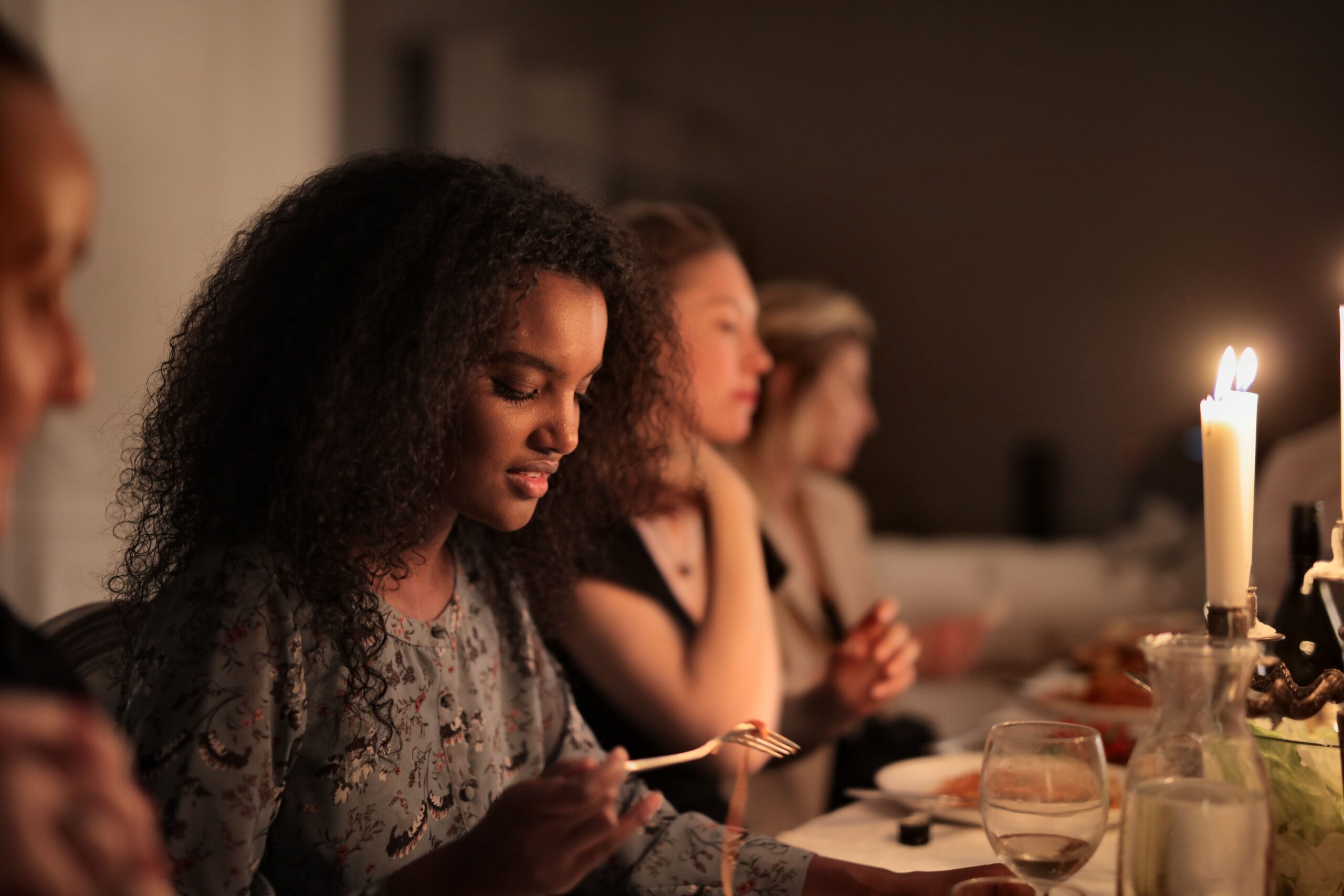
They sing their own songs and primarily use simple string and percussion instruments. They do not depend on elaborate sound systems, lighting, or projectors. Instead, they incorporate visual elements into worship through paintings, flower arrangements, candles, natural objects, and other creative ways of representing the theme of their worship.
Their worship may include different rituals and practices, but these are not random. Everything is intentional. They want their worship to help them slow down, pay attention, and experience communion with God and with one another.
And there is always a meal afterward.
For The Fold, eating together is not simply fellowship after worship. Eating together is part of worship itself. The shared meal reminds them that faith is not only something they experience individually but something they practice through community.
A Sacred and Protected Community
Worship in The Fold is primarily for its members.
If someone wants to invite a new person, the invitation must be discussed with the community. The members need to agree to welcome that person into their worship space.
This may seem strange, especially for a church that is supposed to be welcoming and evangelistic. But The Fold has a different understanding of hospitality. They believe that protecting the intimacy and trust of their community is also important.
They do practice evangelism and welcome new people, but recruitment does not happen during worship.
For them, worship is a sacred space where everyone present should already be committed to being in communion with one another. An invited person should not simply be a random visitor. They should be someone whom the community intentionally wants to welcome.
The Fold, therefore, does not measure its success by how many people attend its worship services. A small, deeply connected community is considered more valuable than a large but disconnected congregation.
The Shepherd
Instead of having a pastor, The Fold has what they call a “Shepherd.”
The Shepherd is responsible for caring for the Fold, guiding its spiritual life, and helping the members grow together. However, the Shepherd is not considered the most important person in the community. Leadership is understood as a responsibility rather than a position of power.
Each Fold consists of roughly twenty people. Twenty is considered the maximum number of Shepherds one can meaningfully care for while maintaining a strong sense of community.
When a Fold approaches twenty members, the Shepherd begins mentoring another person who can eventually become a Shepherd.
The process may take one or two years. During that time, the new Shepherd learns how to facilitate worship, care for people, resolve conflicts, organize the community, teach, and provide spiritual guidance.
Eventually, the new Shepherd will lead a new Fold.
The members then decide who will remain in the original Fold and who will join the new one. For the first year, the original Fold continues to mentor the new Fold until it becomes capable of functioning independently.
The original Fold continues to grow and eventually reaches the same point again.
This intentional multiplication is not primarily about growing the church numerically. It is about preserving the quality of relationships, worship, and community. They believe that once a community becomes too large, people can easily become strangers to one another.
The Fold would rather multiply than become a megachurch.
The Seasons of The Fold
The Fold follows seasons.
Young people in this church are highly organized, and they understand that life has rhythms. Just as the natural world has seasons and plants and animals respond to those seasons, The Fold also organizes its life around different seasons.
They have a rhythm for worship, community life, mission, and evangelism.
Their approach to evangelism is based on farming and agriculture.
The first season is Tilling. Like preparing soil before planting, this is the season when members build relationships with people they believe might eventually become part of the community.
Then comes Seeding, followed by Growing, Pruning, Grafting, Flowering, Fruiting, and finally Harvesting.
Each season has a specific purpose.
Some details of these stages are intentionally kept within the community because The Fold does not want evangelism to become a formula that can be copied. Instead, members learn to recognize the appropriate season for each relationship.
Through this process, they can intentionally decide how much they want to grow as a Fold.
Everyone knows what season they are in, what they are supposed to be doing, and why they are doing it.
Their faith, therefore, has a rhythm.
The Office: A Church Without a Building Still Needs an Organization
Although The Fold does not have a church building, it does have an office.
The office serves as the administrative headquarters of the organization. It is intentionally small because it is not designed for worship or large gatherings.
This is where they keep equipment, materials, records, and other resources. It is also where people can go for assistance or resources from the organization.
There are staff members who manage finances, provide administrative support to the Shepherds, develop educational materials, coordinate ministries, and provide training.
Some Shepherds are paid staff, while others serve as volunteers.
The central office, therefore, supports the Folds without controlling them. Its purpose is to make it easier for local communities to function rather than to create a centralized institution that controls every aspect of church life.
Progressive, but Traditional
The Fold is progressive in some ways but deeply traditional in others.
They want to remove what they understand as colonial influences from Christianity and recover a way of following Jesus that makes sense within their own cultures and traditions.
They question theological and church practices that have been treated as universal simply because they were developed by influential Western theologians or institutions. They believe Christianity should not be dictated by the cultural assumptions of White Western men whose ideas eventually became the foundation for many Christian denominations.
Instead, they want to ask:
What does following Jesus look like in our own context?
They are serious about Jesus' teachings.
They are committed to peace and reject violence as a way of solving problems. They reject war and militarism and seek reconciliation rather than retaliation. They seek justice and regularly volunteer in places where they can help people experiencing poverty and marginalization.
They are also deeply concerned about creation.
They believe that worshiping God includes caring for God's creation. They try to live simply, avoid unnecessary waste, and make environmentally responsible decisions.
Although members may have different careers and professional lives, they intentionally avoid letting wealth and consumption become the center of their lives.
Money Without the Offering Plate
The Fold does not take an offering during worship.
Instead, members make regular financial pledges. Their contributions can be automatically transferred to the organization each month, removing the need to pass an offering plate during worship.
If someone wants to make an additional donation, they can send money directly to the organization's account or mail a check.
Financial management is taken very seriously.
The Fold is registered as a church, but members also participate in economic activities outside of the church's direct ministry. A portion of their collective resources can be invested for long-term sustainability.
They also have a cooperative where members can save money, borrow money when needed, and potentially earn returns through their participation.
The young people in The Fold are intentional about financial transparency, accountability, and safeguards. They develop policies to prevent financial abuse and ensure that money is handled responsibly.
They understand that financial problems can destroy trust within a community, so they try to build structures that protect both their members' money and relationships.
As the movement grows, they may eventually establish their own bank, publishing house, businesses, and other organizations connected to their ministries.
The goal is not to become wealthy.
The goal is to become financially sustainable and independent enough to continue serving their communities.
Their Main Ministry: Young People
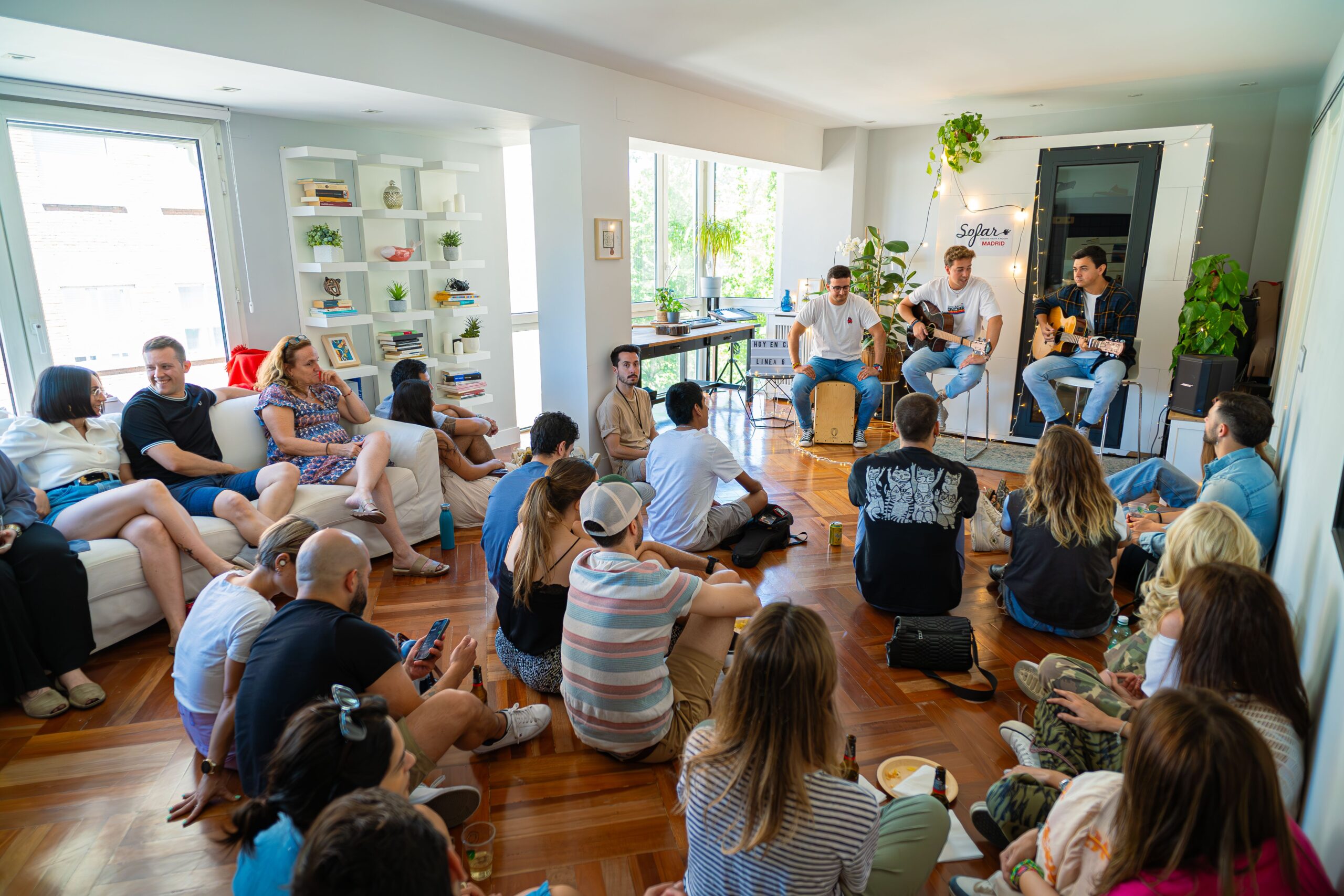
Because The Fold was created by young people, young people are also at the center of its ministry.
Their primary mission is to serve high school and college students.
They produce educational and spiritual materials and organize Bible studies and other gatherings in schools and universities.
They establish youth centers, usually close to schools and universities. These centers provide practical services for students.
A youth center might have computers, printers, study spaces, places to rest, and a small pantry where students can receive free food and other basic school supplies.
Members of The Fold contribute food, school supplies, books, and other resources to these pantries so that students can take what they need.
They also provide scholarships for students who have demonstrated potential but lack the financial resources to continue their education.
Their ministry is therefore not simply about telling young people about Jesus.
It is about becoming a community that young people can actually depend on.
And because they are already present in students' lives, this ministry naturally becomes one of the main ways new people are introduced to The Fold.
A Network of Folds
The Fold eventually spreads across towns and cities, especially near major schools and universities.
There are multiple youth centers, offices, and local communities. Each Fold remains relatively small, but together they form a much larger movement.
The individual Folds remain connected through shared values, resources, leadership training, ministries, and annual gatherings.
Once a year, everyone comes together in one large gathering.
This is the biggest gathering of the entire movement. It takes place during the season of Harvest—the end of one cycle and the beginning of another.
For a few days, people who normally worship in different homes, parks, gardens, and small communities finally meet one another.
They worship together, share meals, tell stories, celebrate what God has done, learn from one another, and prepare for the next season.
Then they return to their individual Folds.
The movement grows, but the individual communities remain small.
So, What Kind of Church Is The Fold?
The Fold is not necessarily a perfect church.
It has its own problems and contradictions.
Its commitment to privacy could potentially become exclusionary. Its desire to reject traditional Christianity could create a new kind of elitism. Its strong organizational structures could eventually become just as institutionalized as the churches it originally rejected. Its financial enterprises could also become a source of power and conflict.
But perhaps that is part of the point.
The question is not whether The Fold is a perfect church.
The question is whether we are willing to imagine the church as something different from what we have inherited.
The history of Christianity shows that the church has continually changed as people have encountered new cultures, contexts, questions, and challenges. The church we know today did not simply appear fully formed. It was shaped by generations of Christians who asked what it meant to follow Jesus in their particular time and place.
So what happens if young people are given the same opportunity?
What if they stop asking how to make the existing church attractive to them and instead ask:
“What kind of church would we create if we started from the beginning?”