

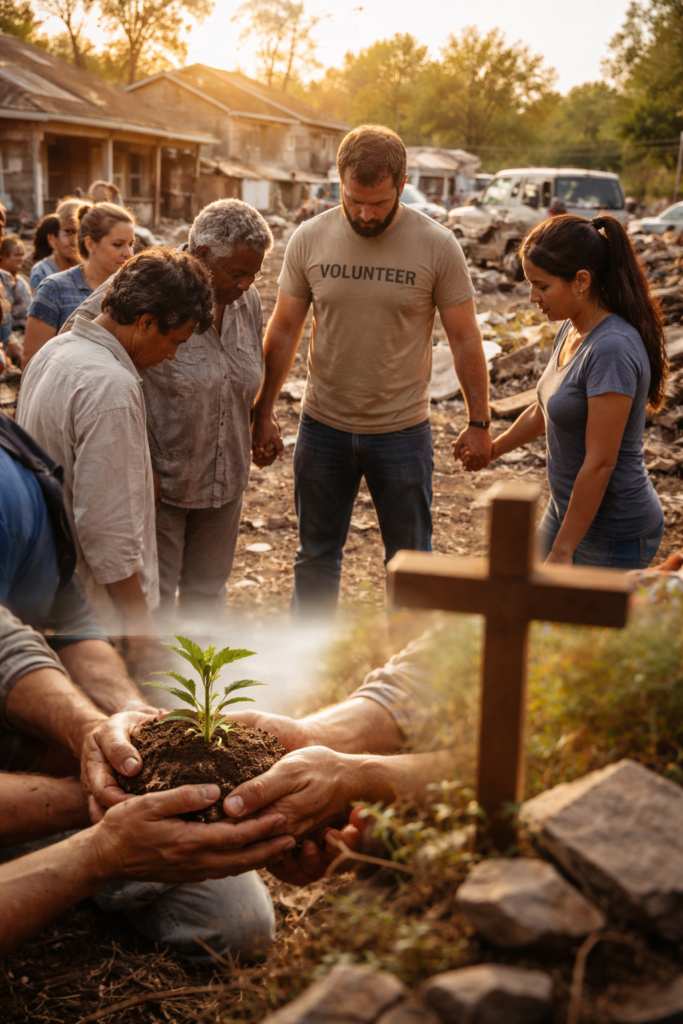
The church is the gathering of like-minded people, and according to Jack McKinney, “when a handful of members get passionate about mission, they can put their beliefs into action” . Our actions—sending people to respond to disasters, providing relief, or helping rebuild communities—are a direct expression of our Christian faith. We respond not only out of mercy but also because we want to spread the theological message of hope to people in distress.
As a church, we are called to be responsive not only to the needs of our fellow Christians but also to the needs of the whole creation. The gospel is not only for humankind but for all creation. The impact of a whole and reconciled gospel on the world depends on the wholeness of a bold and humble church. But to respond faithfully to the needs of creation, we must first be a reconciled people. Only a reconciled people can participate faithfully in God’s reconciling mission. We need to be right with God before we can take part in this mission, especially because we have also participated in the destruction of God’s creation.
God’s will and cosmic design is that no one should suffer unjustly. But because human beings create unjust systems, shalom-type social parameters must serve as a social safety net to offset human disobedience. I believe that the natural disasters happening in the world today are directly related to the sins of humankind. We did not do a good job of taking care of God’s creation as God’s stewards, and the consequences of our neglect are returning to us in the form of natural disasters and famine.
As a church, we need to be at the forefront of environmental movements. Our worship is directly connected to our care for creation; environmentalism in the church should play a similar role to music in our congregational worship.Because of our sinful nature, we not only destroyed our relationship with God’s creation, but we also tarnished our relationship with each other because of greed, selfishness, and hunger for power. But despite the deep scars we inflicted on each other—the violence and the pain—we can only heal broken humanity through nonviolence, a way of life defined by love for others . True healing comes from within us; we need to understand the meaning of the gospel in our lives before we can share it with the rest of creation. According to Cone, the real scandal of the gospel is only available through our solidarity with the crucified people in our midst.
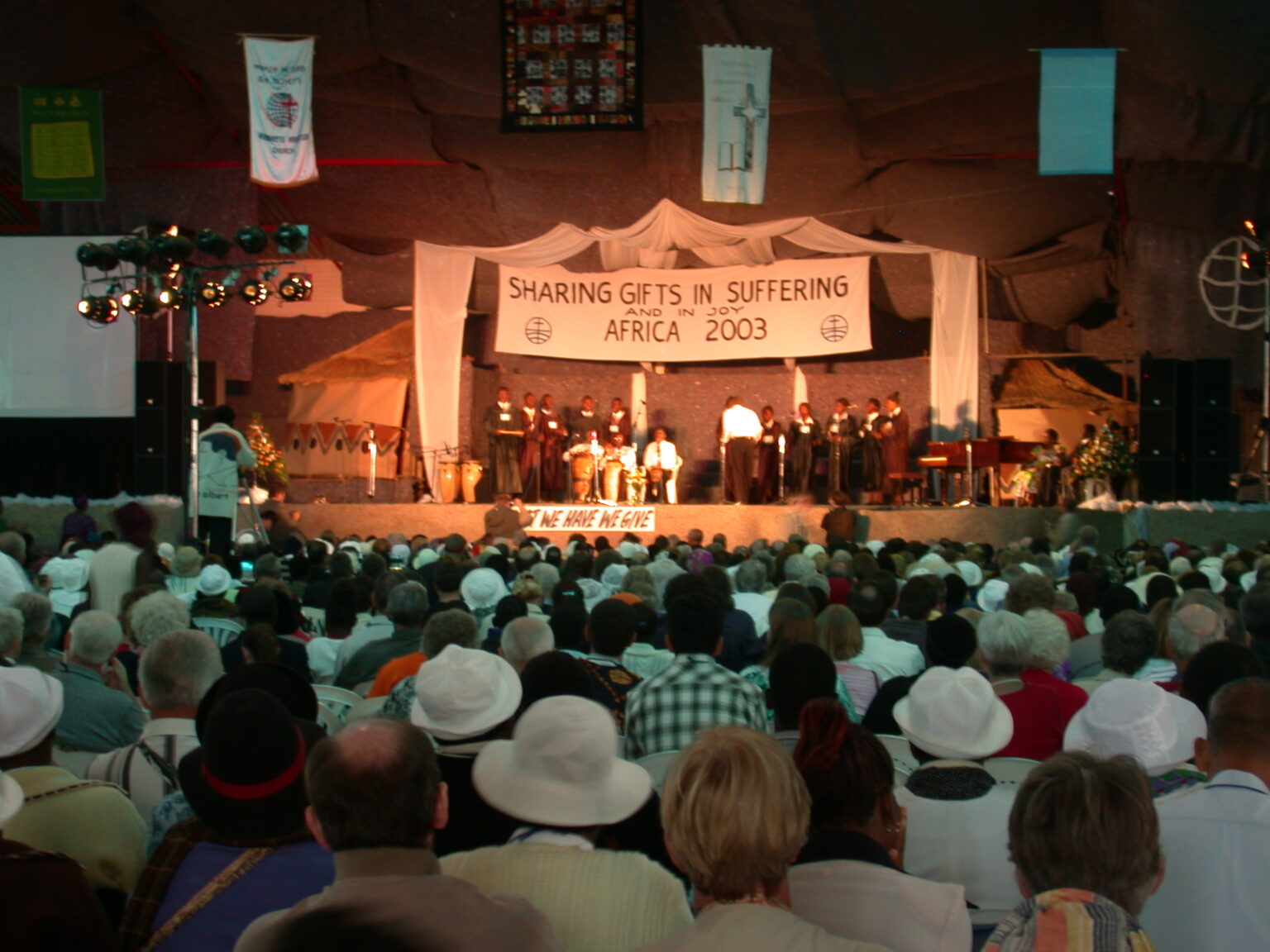
We must identify with the sufferings of others, and then we can truly understand what the gospel means. When we go on missions, we bring not only hope but also the gospel of Christ through our solidarity.When a church decides to send someone on a mission, it should have the foresight to send them not just for one specific task but for a broader purpose. It should be a holistic mission that goes beyond the integration of words and deeds—not only mending physical wounds and emotional brokenness, but also addressing the spiritual needs of the people they are touching. Mennonites are known for their relief operations and social justice efforts, but often lack in evangelism. Kreider describes Mennonites as parasitic because we go to places on a mission to help communities, but we only radicalize those who are already Christians; we are not converting them—we are simply correcting them. We miss the opportunity to heal the spiritual side of broken humanity by refusing to participate in evangelism and share our faith with the people we are reaching. “Without evangelism—the vertical dimension of reconciliation—the Great Commission would amount to intentional humanitarian aid and development work with a cross on top. It would do good in the world, but it would fall short of great,” says Tizon. By reaching people and providing them with relief and humanitarian aid, we are only addressing part of their brokenness. Without evangelism, people will not be introduced to the gospel, and they will not experience the wholeness of God’s shalom.
References:
Cone, J. H. (2011). The cross and the lynching tree. Orbis Books.
Kreider, A., & Krabill, J. R. (2008). Tongue screws and testimony. Mennonite Mission Network.
Natural saints: How people of faith are working to save God’s earth. (2011). Orbis Books.
Tizon, A. (2018). Whole and reconciled: Gospel, church, and mission in a fractured world. IVP Academic.
Woodley, R. (2012). Shalom and the community of creation: An indigenous vision. Cascade Books.