Three Symbolic Trees in the Bible
A visual reflection on fall, redemption, and hope through three trees woven into one sacred story.
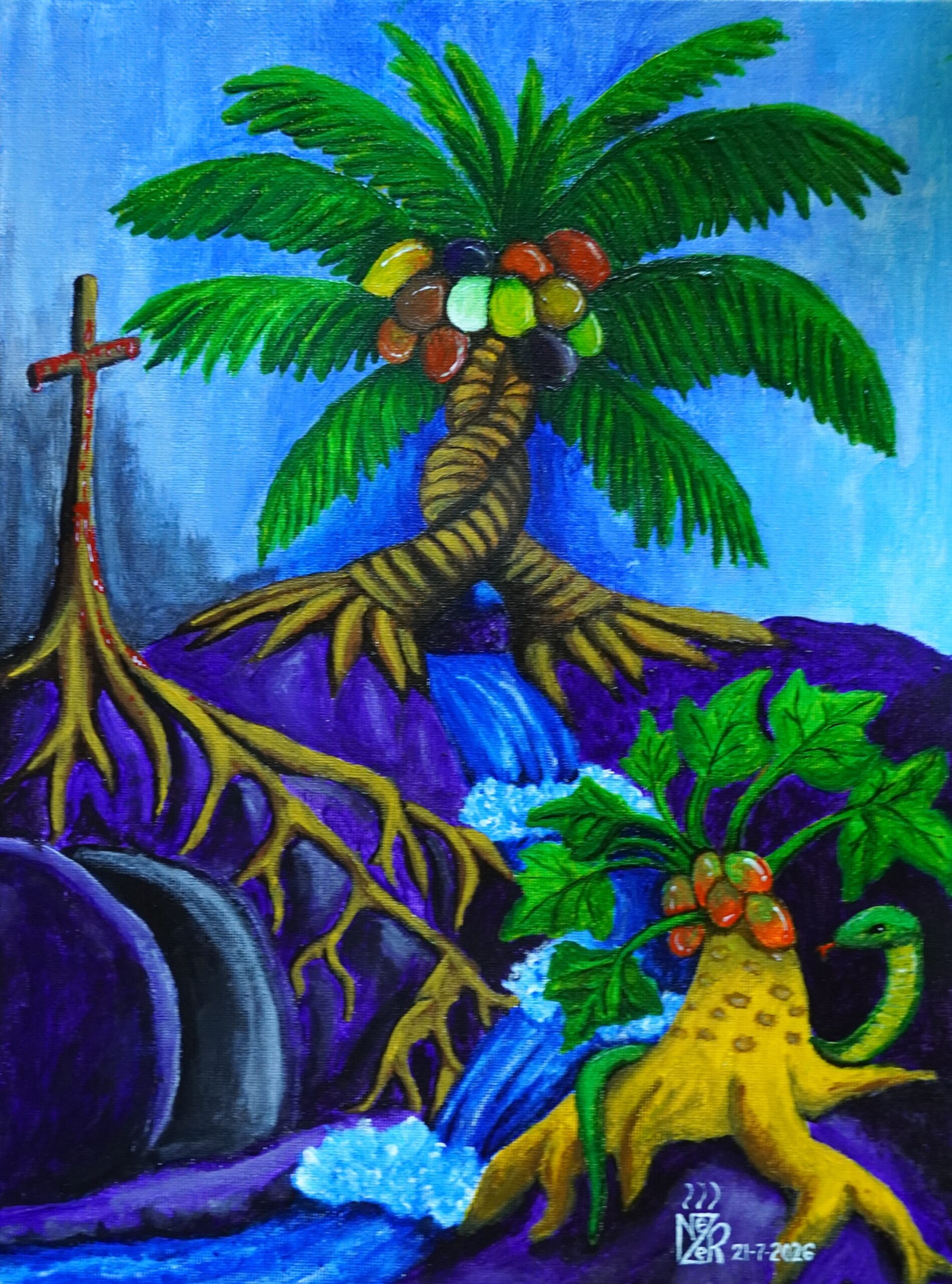
The painting features three symbolic trees found in the Bible, each carrying a different part of the story of God’s saving work.
The Tree of the Knowledge of Good and Evil
The first is the Tree of the Knowledge of Good and Evil (Gen. 2:17), shown with the serpent that tempted Eve (Gen. 3:1–7). Traditionally, many artists portray it as an apple tree, but in this artwork I chose a papaya tree to reflect my Filipino context and to make the image feel more rooted in the lived world I know.
The papaya tree is unusual because it does not look like most other trees. I imagined that if God created a tree whose fruit was not to be eaten, it might look something like a papaya tree. Its unique form makes it difficult to overlook or mistake for another fruit tree. This is where the biblical story of humanity’s fall begins. Through this tree, sin entered the world, bringing brokenness to humankind and beginning God’s long story of restoration and salvation.
The Cross is a Tree
The second tree is the cross, where Jesus was crucified to save humanity from sin (Acts 5:30). In Acts, the cross is also referred to as a tree, so I chose to depict it as a living tree marked with bloodstains. Its roots stretch toward the stream, and beneath it lies Christ’s open tomb, symbolizing his resurrection and victory over death.
The cross is not only a symbol of suffering, but also the place where the whole story of redemption becomes visible.
This image becomes a powerful witness to the central Christian claim: Christ’s death and resurrection are the decisive turning point in the brokenness of the world. What begins in disobedience is answered by divine grace, and what ends in death is transformed into the victory of life.
The Tree of Life
The third tree is the Tree of Life, which appears in Revelation as the final symbol of hope and healing for all nations (Rev. 22:2). I chose the coconut tree for this image because, in Filipino culture, it is often called the “tree of life.” A person can survive with the help of a coconut tree: its fruit provides water and nourishment, its trunk and leaves can be used to build shelter, and its roots have medicinal uses. In this way, the coconut tree becomes a fitting image for the Tree of Life because it is deeply connected with survival, nourishment, and everyday hope.
In the painting, the roots of all three trees extend into the same stream, connecting them together. Just as trees in a forest are connected beneath the ground, these three trees in the Bible are also connected in the story of salvation. Together they represent humanity’s fall, Christ’s saving work, and the promise of eternal life and hope.
Conclusion
The painting is not simply a collection of symbolic images. It is one visual declaration that the biblical story is united from beginning to end: brokenness entered through the first tree, redemption entered through the cross, and hope is fulfilled in the Tree of Life. The painting therefore speaks not only about history, but about theology, memory, and the ongoing work of God in the world.
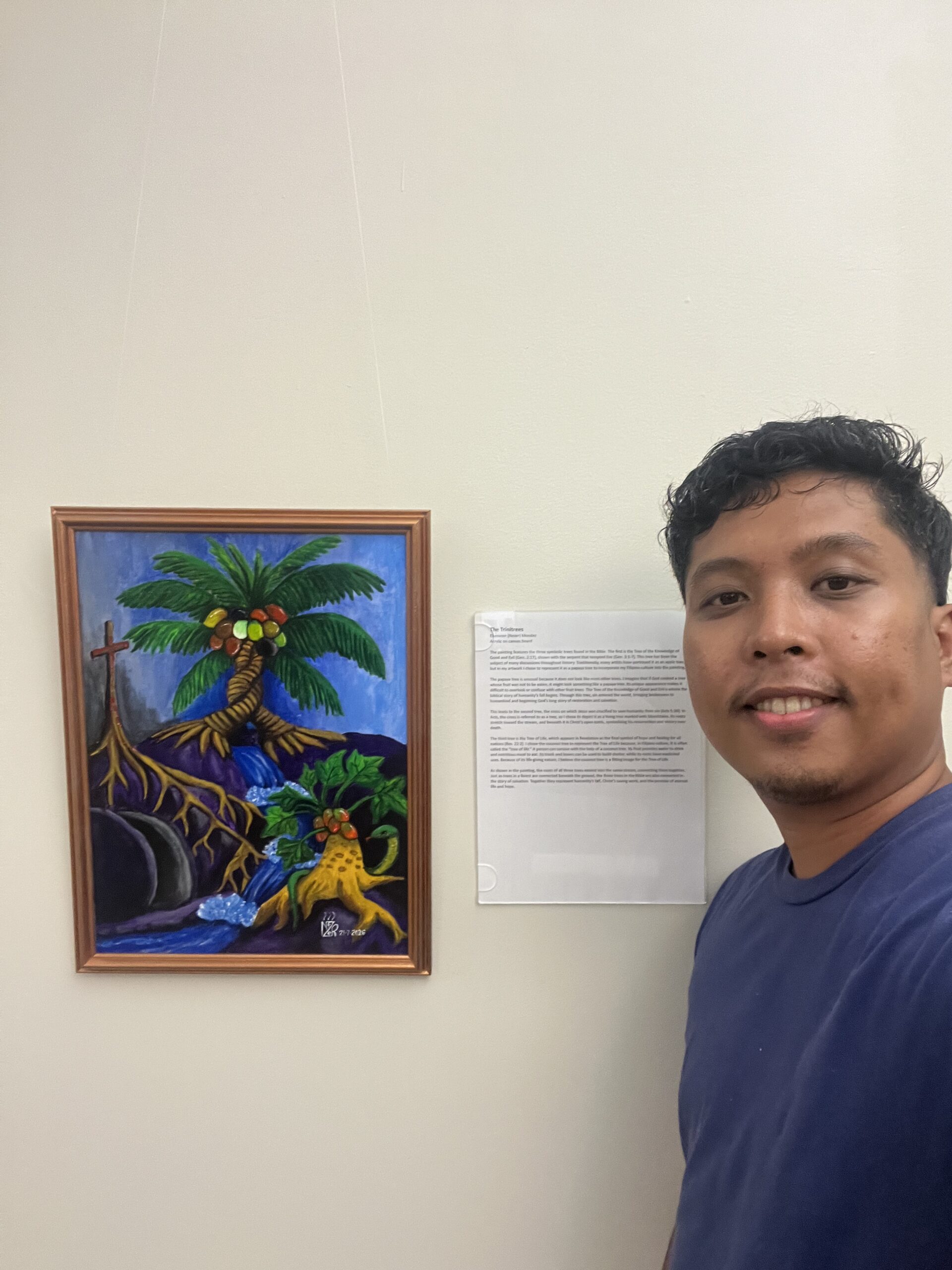
The artwork can now be viewed in the Anabaptist Mennonite Biblical Seminary gallery hall just outside the library.